
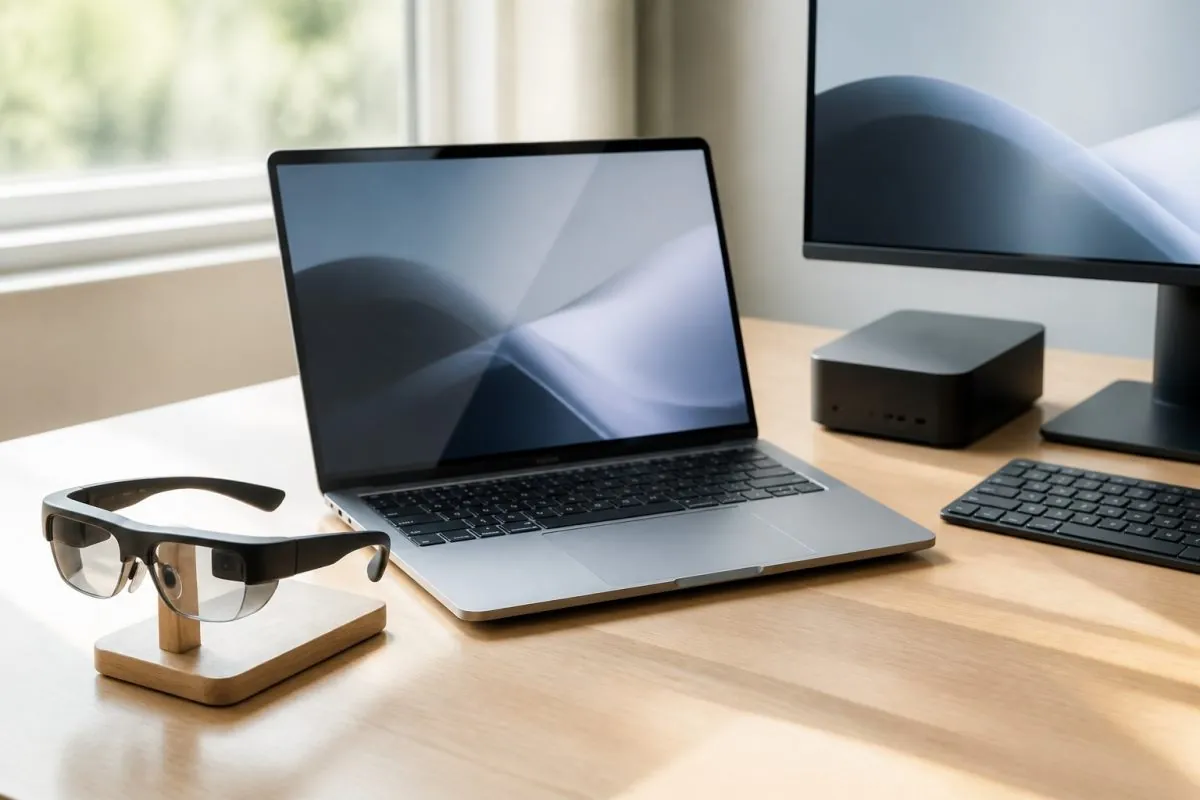
Hybrid work is no longer an experiment; it is the default way most professionals spend their week. As the dust settles, one pattern is becoming clear: the single-device setup is fading. People no longer ask which one laptop, desktop, or gadget should run their life. Instead, they are building small ecosystems where a laptop, a mini PC, and increasingly an AI glasses pair each handle the jobs they do best.
Here is how the multi-device work trend is shaping buying decisions in 2026 – and what it means if you are sourcing devices for a retail line, an office deployment, or a wholesale program.
The Hybrid Work Setup Is Now a Multi-Device Ecosystem
A typical professional now works from three places: a desk at home, a desk at the office, and somewhere in between – a train, a cafe, a client site. No single device is great at all three. That is why the modern setup is a team of devices, each chosen for a specific role, sharing one workflow through the cloud.
For buyers, this trend changes how products are sold. Customers rarely want a bare device anymore; they want a combination that fits how they actually work. Understanding the role of each category is the first step to recommending the right mix.
Laptops: The Portable Core of the Workday
The laptop remains the center of gravity for most hybrid workers. It travels, it docks, and it carries the full office with it. The 2026 trends in this category are about balance rather than raw power: longer battery life, quieter operation, and enough performance for everyday productivity without the weight of a workstation.
AI-capable laptops are also moving into the mainstream. On-device AI features – real-time transcription, background cleanup in video calls, and intelligent battery management – are becoming expected rather than exotic. For budget-conscious buyers, the key is to look for models that deliver these features without inflating the price beyond the target market.
Mini PCs: Quiet, Compact, Always-On Desk Power
While the laptop handles mobility, the mini PC is winning the fixed desk. Small enough to sit behind a monitor or mount under a table, a mini PC turns a spare screen into a complete workstation without the footprint or noise of a traditional tower.
Three things are driving mini PC demand in 2026:
- Low power draw. Modern mini PCs sip electricity compared with full-size desktops, which matters for offices running dozens of machines.
- Silent operation. Fanless or near-silent designs fit open-plan offices and home studios where noise is a real complaint.
- Multi-display support. Most models drive two or three screens comfortably, making them natural hubs for trading desks, admin stations, and content workflows.
For many users, the winning combo is a laptop for the road and a mini PC at home – the same accounts, the same files, and no heavy machine to carry.
AI Glasses: A Hands-Free Layer for Quick Access
The newest member of the work ecosystem is AI glasses. While still an emerging category, 2026 is the year they start appearing on real desks rather than only in concept videos. Their role is narrow but useful: hands-free access to information that would otherwise interrupt your flow.
Typical use cases include reading notifications and messages without picking up a phone, translating conversations or signage while traveling, checking navigation hands-free, and capturing quick photos or notes during meetings and site visits. Paired with a laptop or mini PC through the cloud, AI glasses act as a lightweight third screen that lives on your face.
For wholesalers, the practical question is timing: the category is growing fast, but it is still settling on standards for battery life, display quality, and companion software. Stocking a small, carefully selected range lets you test the market while the technology matures.
How to Build a Cohesive Multi-Device Workflow
Devices only form a real ecosystem when they share data easily. Cloud sync, cross-platform apps, and common accessories do the heavy lifting:
- Shared peripherals. A USB-C dock lets a laptop and a mini PC use the same monitor, keyboard, and mouse – one desk, two devices, zero cable chaos.
- Cloud-first habits. Documents, bookmarks, and settings that live in the cloud follow the user from laptop to mini PC to glasses.
- One ecosystem, one support line. For offices, standardizing on a small set of models simplifies deployment, training, and warranty handling.
What This Means for Buyers and Distributors
The multi-device trend rewards partners who offer coherent ranges rather than isolated products. A distributor that can pair a reliable laptop line with complementary mini PCs – and keep an eye on the AI glasses category – gives retailers a story to sell and an easy upgrade path for their customers.
At RunCK, we supply laptops, mini PCs, and emerging smart device categories with a focus on dependable quality control and flexible wholesale support. From configuration guidance and samples to batch orders and after-sales service, we help buyers build product lines that match the way people actually work in 2026.
The single-device era is over. The winning setups are ecosystems – and the suppliers who understand each device’s role in that ecosystem will be the ones retailers keep coming back to.
